Wednesday, 30 April 2014

Looking back + more references

Back during the production of my A-Level film 'Aphelion' I was very inspired by the photography of Cindy Sherman and I ended up setting up my shots in ways that were reminiscent of her most iconic images and a few from the Untitled series. I've been inspired to frame some of my shots after her work again for this production and I feel like I can relate the style and themes of her work to my piece.

'Aphelion'


Cindy Sherman 'Untitled'

Projection scene visual references

I've arranged to shoot the projector scene in the TV studio this Friday so I've decided to get together some examples of the 'look' I'm looking to achieve in this scene. I loved this shoot by photographer Dennis Auburn, titled 'Aura'.
I'm very inspired by the framing of the subject and how the projector turns her into something akin to a blank canvas. This brings me back to a point I made in an earlier post about the idea behind this scene. I want Lucy's physical body to be acting as the canvas and the images shown on the projector become the paint to tell the story.


Thursday, 17 April 2014

Shooting Day 1 + new ideas

Apologies for lack of posting, inspiration has been dry lately but today I wrapped my first day of shooting and with that came a bunch of new ideas.


A couple of stills from the day. Initially I thought the shoot would be a disaster since it started to absolutely pour down with rain when I left to go meet my actress, but luckily that passed within the hour and we were able to get on with shooting. What I shot is going to be a part of the series of cutaways that make up the bulk of my film, showing Lucy in various locations or situations that depict her state of mind. I shot around the Lagan toe path and Botanic Gardens so I got a good range of urban and natural locations which looked really good on film.

One of the new ideas I had was to have the monologue read in Spanish and have English subtitles. I thought this would be interesting and unexpected (unless you've read this blog of course) and I've never done anything like this before. My actress is bilingual and speaks perfect fluent Spanish so she's agreed to translate the monologue for me.

All in all a successful day. My next step will be shooting in the studio for the projection scene which I've gathered a fair amount of footage for and a few reference images to acquaint myself with how it can be done effectively.

Wednesday, 2 April 2014

The Cast

Elena Kohanoff in the role of Lucy
Height: 5’4”
Age: 20

Classically trained singer and dancer, amateur actress.

The Pitch

So last week I pitched 'Cherries at Noon' to my tutor, and overall I think I did well and I'm pleased with how I performed. I started off by explaining the story of the film and then went on to discuss specific scenes I was excited to shoot and the various styles I wanted to incorporate.

I saw my preparation for the film to be a decent selling point, having prepared two mood boards for my piece and brought a profile of my actress and a fully developed script. Aside from the positives, there were concerns that maybe I'm biting off more than I can chew with this production, and I can see why that can be said. It's my first solo project in over 2 years so I myself also had concerns myself about whether or not this would work out. Having weighed up the pros and cons and the size of the production, I'm confident that I can make this happen.

Another concern was the continuity between the scenes. I had brought up how I wanted no two scenes to be similar, so there were concerns over the continuity, but I reassured that there would be a core-like line running through each scene, so while many would be in various styles, they would still connect and compliment each other.

Photos of my mood boards to come!

Thursday, 20 March 2014

Dogme 95

The Dogme 95 rules 
1 Filming must be done on location. Props and sets must not be brought in 
2 Music must not be used unless it occurs within the scene being filmed 
3 The camera must be hand-held; filming must take place where the action takes place 
4 The film must be in colour. No special lighting 
5 Optical work and filters are forbidden 
6 No superficial action (No murders, weapons, etc.) 
7 No temporal or geographical alienation. 
8 No genre movies 
9 The aspect ratio must be 4:3, not widescreen. 
10 The director must not be credited

Saturday, 8 March 2014

The main idea + what I need to do now

Okay so I've settled on a final idea for my final film... Finally. Having gone through various films ranging from fantasy, psychological horror to post-apocalyptic zombies, I've decided on the recovery of depression. My film follows a young woman's reflection on her recovery, discussing her hopes and dreams and the difficulties she has in reaching out to people. It is a poetic, visual piece inspired by arthouse filmmaker Lars Von Trier, with a big focus on imagery and juxtaposition. 

Now that I have a script and most things mapped out including an actress, I need to do a read-through of my script with said actress, which I am organizing as I type this. By doing a read-through I'll have a better idea of how the monologue sounds on film and I can decide what to cut or to add in anything else for a better flow.

An extract from my script, 'Cherries at Noon'

"I want to talk about all of my favourite things, the things that make life worth living for me. Soon I want to live for every season like I once did. I will live for Spring, when life is beginning once again and warmth returns to the world. I will live for the Summer, for the smell of the blooming rose and the taste of elderflower cordial. I will live for Autumn, when as nature slowly begins her slumber, the colours of the falling leaves dance and shine in the fading sunlight. I will even live for Winter, when life is at it's most fragile and hope can falter, but no matter what and above all, I will live for myself."


Updates and such.

I'm aware that I've been too quiet on this for the past week or so, but I'm feeling fantastic in terms of this creative process. At the end of last month I had the absolute pleasure of bearing witness to the latest work of Lars Von Trier, the aptly titled 'Nymphomaniac'. The film has garnered a name for it's controversial content and meditative approach to topics such as religion, philosophy and the arts. It's hard to sum it up in one word, but it's one of my favourite pieces from this director.

What I really loved about it was the distinct visual style that has been carried on from Von Trier's previous work. The use of handheld camera and natural light gives for a beautiful, candid feel that defies convention. Colours burst from the screen and the dialogue drips with black humour and pierces with sharp wit and fierce intelligence.

I'm drawing a lot of inspiration for my edit from this, mainly from the use of split-screen and montage that is present at the end of Part 1 of the film. I have just finished a re-draft of my script and decided to throw in a more optimistic but poetic section about living. In Nymphomaniac, Joe is a character of extreme self-loathing who refuses to justify her actions at any point in her life but still remains darkly humourous and witty, while my character is slowly coming to terms with her recovery and strives to overcome the situation she's in psychologically.

Wednesday, 26 February 2014

Dislocation and The Darjeeling Limited.

Recently I've had the pleasure of revisiting a film I watched quite some time ago now, Wes Anderson's 'The Darjeeling Limited'. It's a strange film that doesn't quite fit into a specific genre, with tones shifting from screwball comedy, to family drama and tragedy. We have been asked to see how this film relates to the theme of 'dislocation', and after numerous recent viewings I think I can see how it does.
There is a lot of symbolism and visual metaphor present in the film, from colours to the placement and framing of characters in scenes. When I think of dislocation in relation to the film, the first character that comes to mind is Jack, who is very aloof from his brothers at the beginning of the film. He sleeps in a separate compartment from his brothers and goes off on his own in pursuit of Rita the stewardess. He seems to be "politely forced" into taking this compartment while being referred to as a 'lone wolf'.
The colour scheme of the trains seems to represent the relationship between the brothers throughout the film, starting out as a cold blue seen everywhere on the train, to a passionate red at the very end of the film. The Indian locations range from golden browns and yellows to vibrant greens, but always feels toned down when compared to the inside of the train, which could represent the culture-shock the brothers are experiencing.
It's clear that this is a very dysfunctional family. The three brothers haven't spoken in a year, their Father is dead and their Mother has dedicated her life to the church in India and lives as a nun. Initially, all they have in common is that they're brothers. Francis is free-spirited and reckless, Peter is a family man dedicated to his wife, and Jack is a lonely, artistic soul tormented by the thoughts of his ex-girlfriend. They are dislocated from one another, and the story is a healing process.
Another big point of symbolism is the baggage they are carrying around with them everywhere. This is metaphorical in the sense that they are literally lugging these designer Louis Vuitton and Marc Jacobs suitcases, and they are carrying a great deal of emotional baggage. When they throw their luggage away at the end of the film, they are leaving behind both the problems they have with one another, and symbols of the opulent lifestyle they had previously led.

Sunday, 23 February 2014

Old, new, borrowed... Blue?

Blue is often associated with sadness. Sadness can often come with loneliness, and loneliness sucks really bad.

To be frank, the story I had initially planned is too complex a production for me to handle. There's a lot to take into account, every aspect of the production must be prepared down to a 'T'. While it's certainly within my ability to tackle this project, for the sake of my well-being I'm opting for a simpler, but more personal approach to the story and the way it's told.

I've been experimenting with different ideas and characters and one that I've constantly come back to is someone going through a rough time and wanting to be left alone. I spent a couple of nights obsessively reading poetry on the themes of loneliness and depression, from Sylvia Plath to Edgar Allan Poe. In the past I've tried to stay as far away from morose and sadness as I possibly could, but I guess at this point in my life it'd be a good thing to get it out there and do something that I've been suppressing for quite a long time.

I recently read a powerful poem by Sylvia Plath, "Tulips", in which she writes about her time in the hospital and wanting to be left alone, but is consistently bothered by the gift of red tulips, which she describes as "African cats opening their jaws". In a way I can relate to this poem and it's desire to be left alone, but at the same time for me it comes with the desire for company, which has become the central idea behind the story.

Following a suicide attempt, a young woman is recovering and battles with the desire to be left alone conflicted with the desire for company. We don't know why she did it or how, what only matters is her recovery and how she battles with these feelings. Most of the story takes place in a plain, sparsely decorated white room with a bed and chair. We see our protagonist sitting upright in her bed, almost oblivious to the people visiting her.

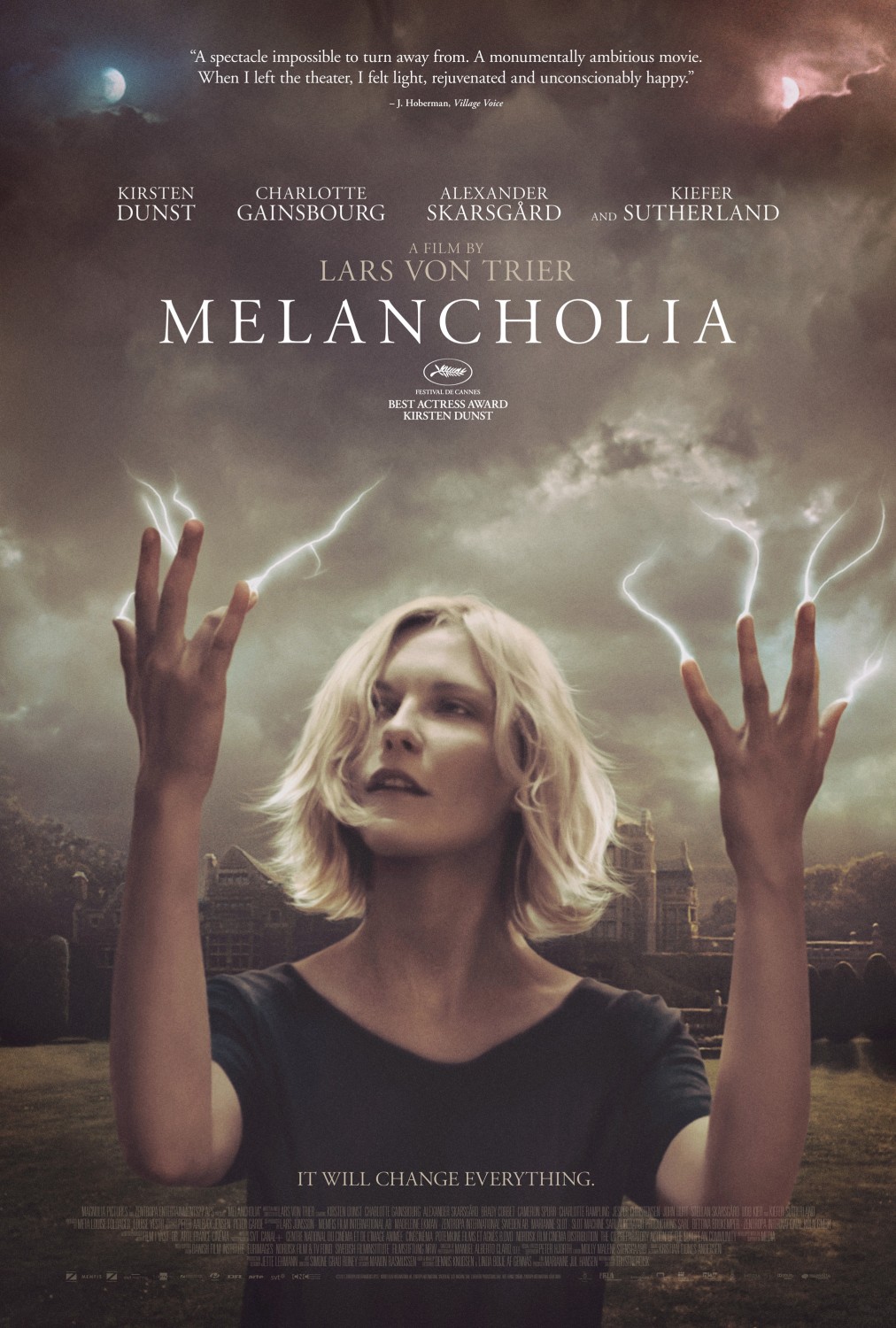
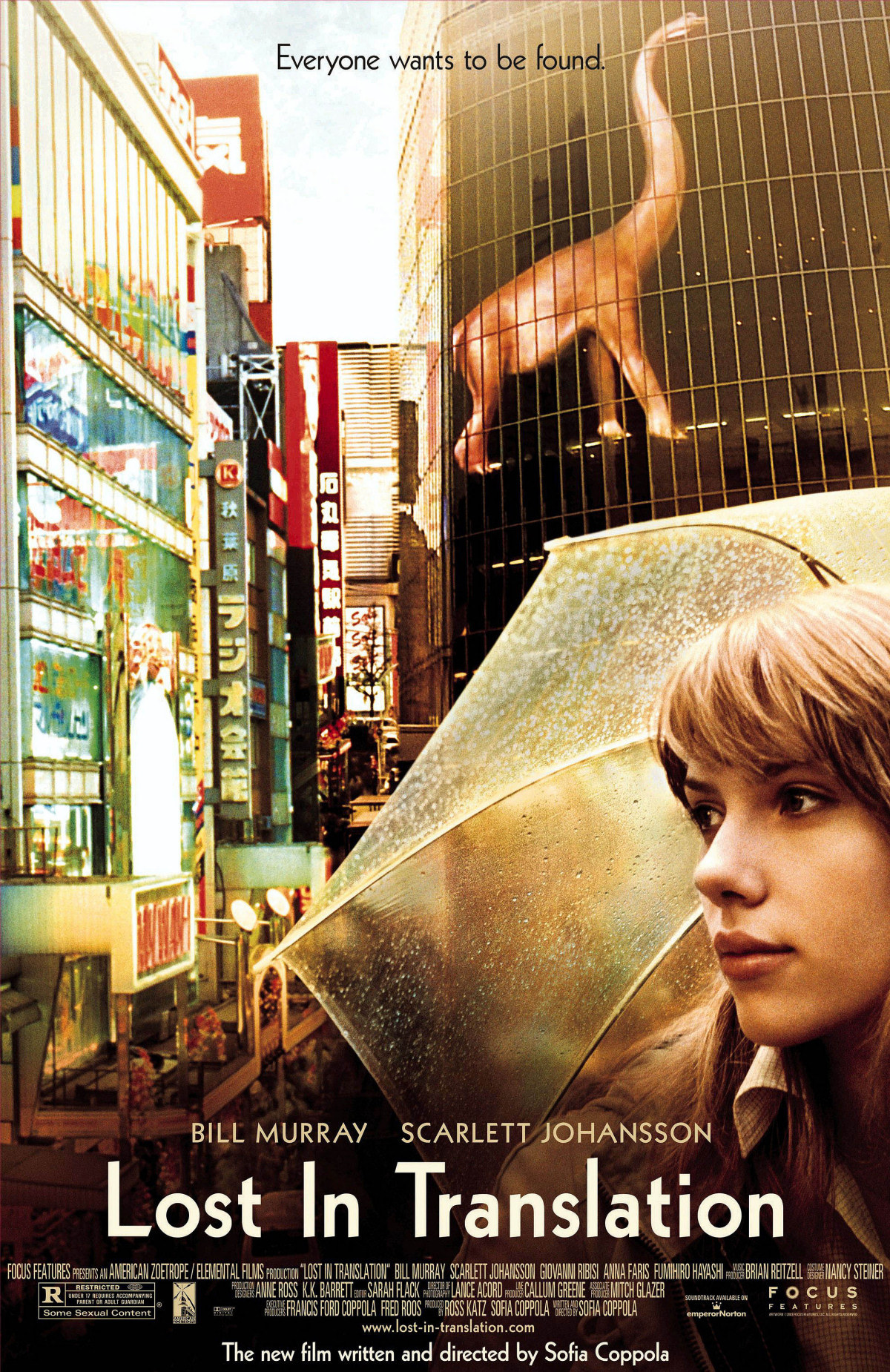
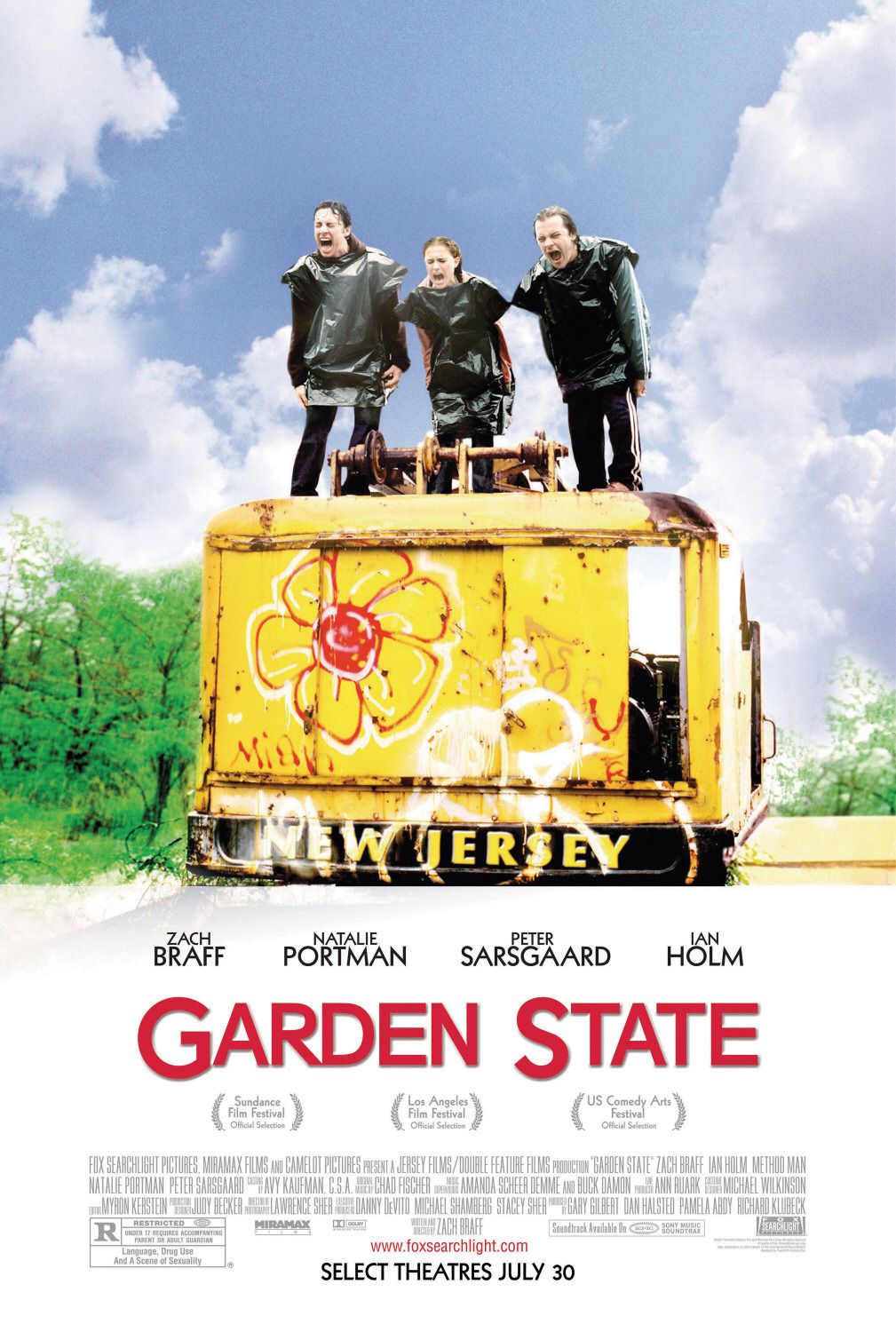
Visually I'm still very inspired by Asian cinema but also by the work of Sofia Coppola and Lars Von Trier (the latter dealing heavily with depression). I've come up with a few references that I'm using while I draft a script.

Melancholia (dir. Lars Von Trier)

Lost in Translation (dir. Sofia Coppola)


Garden State (dir. Zach Braff)

Young Adult (dir. Jason Reitman)

Black Swan (dir. Darren Aronofsky)

Perfect Blue (dir. Satoshi Kon)

My references range from lighter, comedic type films to the darker, gritter and more psychological stories. I want to go somewhere in between, crossing a witty narration with a dark subject matter and evocative imagery and interesting techniques.

The techniques used by Sofia Coppola and Lars Von Trier are of particular influence to me. Coppola's movies are visually stunning with the use of light and how she frames her subjects. Symbolism is very subtle and the viewer is quietly coaxed into the deeper meanings. Von Trier does similar things but in a much more provocative and liberal way. His use of handheld camera in shots often juxtaposes the fantastical imagery seen in his films, or he will juxtapose a dark scene with an odd choice of classical music to really challenge the viewer. His use of split screen is also very interesting. We will see the central scene and either side of it we will have two images that can give further insight into the head of our character.

Montage is another thing I love to incorporate, and Darren Aronofsky uses it beautifully in his films Black Swan and Requiem for a Dream. The end montage of 'Requiem' is brutal and unflinching, and the club scene in 'Black Swan' is pounding and electric. All of these directors also use slow-motion that captures the tiny nuances of a performance or bring attention to a specific detail.

Thursday, 13 February 2014

Desolation and Dislocation

Having an elaborate and well-thought-out idea is all well and good, but when the do-ability is questioned you are faced with two choices:

1) Work like hell and organize every aspect of your film down to the last spec of dust.

2) Come up with an alternative idea that's more do-able, that still holds your enthusiasm and artistic vision.

An idea that I've been throwing around in my head is the story of two people trying to survive in a desolate and dangerous post-apocalyptic landscape. It has the potential to be very cinematic and moving, Zombies is something that can be overdone but I feel that with the recent popularity of these flesh-eating creatures I would be playing to a lot of people's interests.
Recently there was a video game released, 'The Last of Us' and follows the story of a man and a young girl as they try to survive in a dangerous world ravaged by a deadly virus. What strikes me about the game is that the real threat to our characters isn't the zombies that have almost wiped out humanity, but it's the humans that are left that pose the real danger. It basically shows us that people change and become extremely self-reliant when given the will to survive.
In the game, the relationship between the two lead characters (Joel and Ellie) is vital to the emotional impact of the story. This is something I need to seriously consider with my two characters. They learn from each other, they rely on each other and it is clear that they genuinely care for each other.

I can't imagine location will be too problematic, I have a lot of areas in mind that give off a desolate and post-apocalyptic vibe, particularly in the rural areas near me e.g. the Purdysburn hospital complex. The cast is very small, two people at the most and (if I decide on the zombies) a cast of extras. A lot of fun can be had with costume and makeup and with the resources available to me this idea seems very do-able.

Meeting the parents + reference images

One thing you should always consider when developing a film is how the audience can (or cannot) relate to the story. While my original idea is almost intended to distance the audience, I feel this new idea is very relateable while still keeping in with the theme of dislocation.
When you're in a relationship, meeting your partner's parents or your partner meeting your parents can be a daunting prospect. This is a thought that has come into my head more-or-less within the last 48 hours so I've been playing around with it and trying to see if I can still keep elements of my initial idea. So, what if a guy you were dating through an online dating service was about to introduce you to his family, and they were like the Addams family basically? Dislocation ties in with Jess (the main character) feeling out of place among these strange, kooky and Gothic characters.

More to come on this idea, for now here are a number of reference images that I'm drawing some inspiration from. 


I'm very inspired by the hollowed out, almost doll-like look that a lot of Burton's women have so I'm excited to see what my friend can do with this idea.

Oh make me over

I have a couple of people in mind who are happy to help me in the event that this project takes off. One of these people is my oldest friend, Natalie. We've been friend's since we were 5 and we're always happy to help each other out. Aside from being one of my closest friends, she's also an incredibly talented special effects makeup artist (those of a squeamish look away please!).
Since the look of this concept has an overall Gothic feel to it and this style is something we've both been interested in, I'm looking forward to collaborating on a look that will add to the Gothic style. For reference I'm looking at the work of Tim Burton and the makeup in his films, particularly 'Beetlejuice' and 'Sleepy Hollow'.

At this point in development, I'm seriously torn. I had initially envisaged this project as a dark, psychological thriller but after conversations and discussions with friends, the idea of comedy is becoming very appealing to me, and I feel the theme of dislocation can work very well in this new(ish) idea.

Reference images + more on the new concept to come.

Thursday, 6 February 2014

Doodling.


Even before I come up with a story or fully-rounded characters, I will draw my characters obsessively and sketch costume, hair, makeup. It might be considered a bad habit, but I very much work in visuals, even moreso when I'm writing. The look is extremely important for me.

Watch-list for the next few days.

Just a couple of films I will be watching/re-watching over the next few days.

Who's Afraid of Virginia Woolf?
A Tale of Two Sisters

Stoker

A Tale.

Like I said before, Korean cinema is a huge influence on myself and this project I'm developing. One film that's inspiring above the rest is a horror film I watched a long time ago, Kim Ji-woon's 'Janghwa, Hongryeon' in english, 'A Tale of Two Sisters'. The film follows the story of a young girl returning to her family following institutionalization in a mental hospital, she returns to her loving younger sister and father, but also the domineering step-mother. It soon starts to appear that not all is what it seems in the idyllic lake-side home and what follows is a beautiful concoction of psychological horror and brutal twists
 The narrative is very loosely adapted from an old Korean fairy tale which tells the tale of a wicked stepmother who will stop at nothing to save her inheritance, even if it means humiliating and murdering her stepdaughters. Like I said, the film is extremely loosely based on this story and there are only a couple of similarities with different outcomes etc.

The fairy tale set up is an interesting thought to me, the wicked stepmother archetype may be a cliche but it is a classic setup, and maybe an opportunity to be a little subversive and turn the tables. In 'Tale', the protagonist Su-mi is at times a brutal match for her nasty stepmother, this is something I'd like to take further in my piece, maybe with the stepmother coming out as a potential victim. These are all things to consider if I'm going to come with a 'satisfying' conclusion to my story. I use the word satisfying lightly because as with most of the films I watched, they will often leave you wanting more, not offering the 100% vacuum-packed closure that we're used to in classic Hollywood.

So how does this relate back to dislocation? Well, returning to life after institutionalization can be considered a great dislocation in both ways (the institutionalization itself and coming home). The psychology of the characters is very dislocated, having distorted views on themselves, others and the events that are transpiring in front of them.

Try.


'Try' (2000) 
dir. Jonas Ã…kerlund 
Wri. Billy Corgan

This is a short-film I watched a long time ago back in A-Level. It's a brutal film about a young homeless couple living in a Stockholm train station and their struggle for a better life while dealing with the trouble of drug addiction and pregnancy. I personally love Ã…kerlund's style, he has directed some of my favourite music videos of the past two decades, from Madonna to Rammstein, he has a distinctive style that leaps off the screen and demands to be noticed.

In this piece there's a stark and shocking transition between the psychedelic dream gone wrong and the grim and dark reality our protagonists live in. The entire piece is done in voice-over right until the end and adds a real gut punch to the visuals. 

Creative Skeletons

I'd like to think that I'm a creative individual with at least one creative bone in my body, we all have an element of creativity that is unique to us, our own personal vision and ideas etc.

I've found it fun (I was about to put easy but the last thing I want to be at this stage is complacent) to play about with the theme of 'dislocation'. Over the past week I've been digging out any Korean films I own and rabidly looking for new ones. Something that I've noticed quite a lot in the films I have watched is the theme of 'family' and often how important it is. For me, personally, my family is the most important thing in my life, blood is definitely thicker than water.
I recently watched Park Chan-wook's revenge thriller "Sympathy for Lady Vengeance", a story of a woman who has just been released from prison, having been convicted of the kidnapping and murder of a young boy. As the reasons behind her conviction become more clear, so begins her quest for revenge. Without spoiling too much, it's a brutal film. I'm not a squeamish person by nature, but I did find some of the scenes towards the end extremely hard-going. 'Lady Vengeance' covers the themes of revenge, family, love and possession. Like a lot of revenge thrillers it poses the question, "Do the ends justify the means?", a question I find it very difficult to answer. Again, without spoiling the film, Geum-Ja finishes her quest and reclaims her life, helping others along the way, but she killed to get to this point, so is she truly beyond redemption?

Aside from the tough themes, the film is extremely stylish and beautiful to look at, despite the grim subject matter and on-screen events. Every one of Director Park's films are immaculately
framed and stunningly shot by long-term collaborator Chung Chung-hoon. This is something that really inspires me, that despite the shocking events everything remains artistic and beautiful, almost like standing in the face of adversity.

Another film I watched over the week was "The Host", a creature-feature blockbuster from another Korean master, Bong Joon-ho. The film follows the story of a family who try to survive as a ferocious mutant sea monster ravages the citizens of Seoul along the banks of the Han river. While the film is marketed as a special-effects thrill ride, the monster becomes secondary to the main point of the story, a broken family who are trying to reunite in the face of a great disaster.

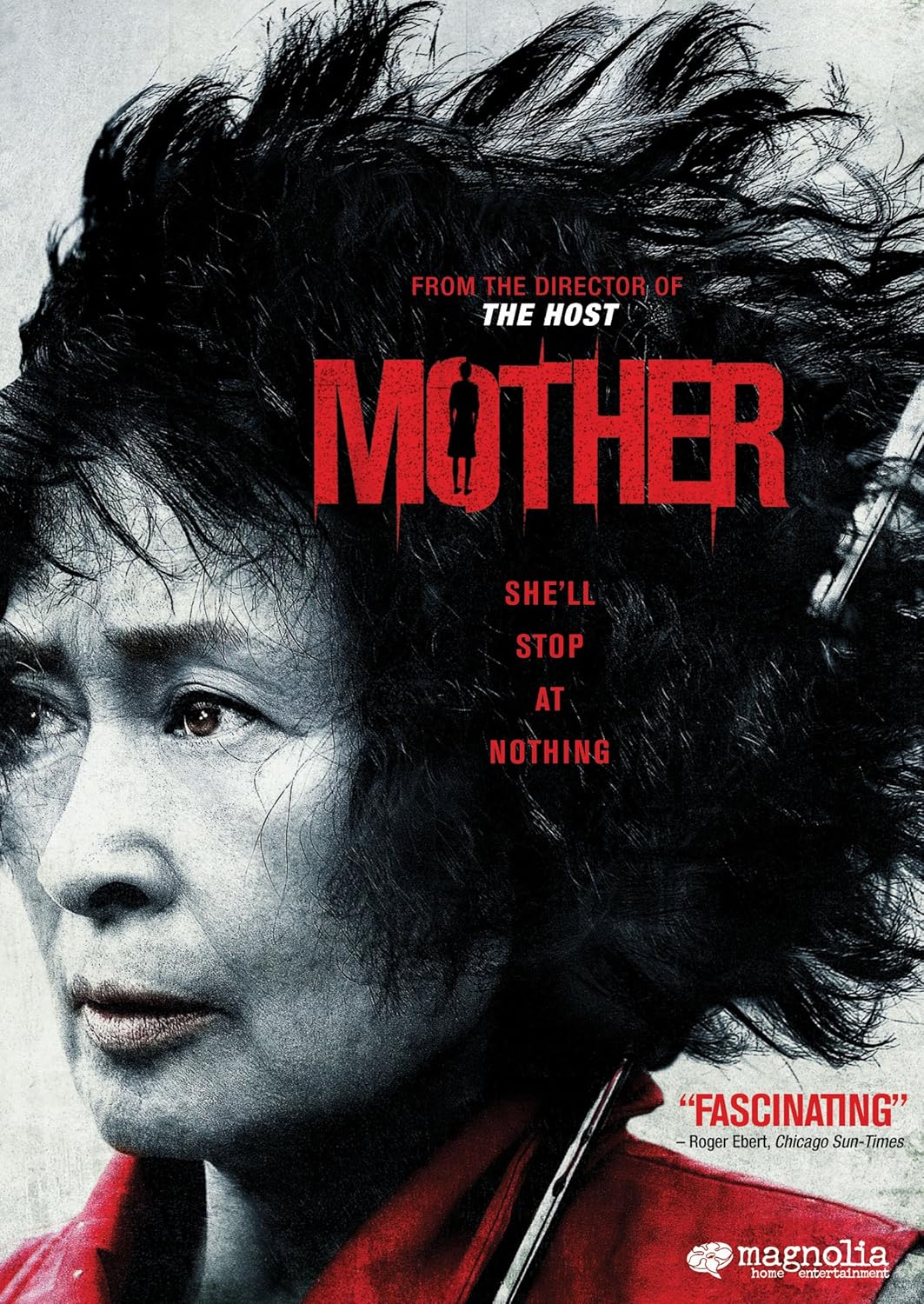
Bong Joon-ho is a genius when it comes to tonal changes and merging genre. His films are jam-packed with pitch black humour and moments of raw emotion. 'Host' does this beautifully, along with 'Mother', a personal favourite of mine. 'Mother' follows the same theme of family, with a nameless Mother going to impossible lengths to prove he
r son's innocence. 'Mother' merges family drama with black-as-night humour and noir-esque thriller. This is one thing I love about Korean cinema, it dares to be different, it refuses to be put into a single box, it takes genre elements and plays with them, and defies the classic Hollywood style.

Thursday, 30 January 2014

Chevalier

Today in class we watched 'Hotel Chevalier' (dir. Wes Anderson), a companion short film to 'The Darjeeling Limited'. This piece stars Jason Schwartzman and Natalie Portman as an on-again-off-again couple who meet again in the eponymous hotel.

Being given the theme of 'dislocation', it's important to see how this piece relates to the theme and vice versa. Gathering on what you see in the film, it is clear to see that Schwartzman's character is dislocated from a 'normal' life. He is a wealthy man who has been living in an extremely luxurious and expensive hotel room, even going as far as getting his hair cut by a random barber in the hotel lobby. He has detached and dislocated himself from all contact with the outside world, and even initially treats his girlfriend as an intruder over the phone.
The room itself seems to become a character in itself, bathed in warm yellows and reds, and envelopes the characters into it's own separate, cut-off world with it's strange paintings and collected nick-nacks. The song playing sings of wanting to get into someones head, which can relate to the two characters trying to understand the other, faced with ambiguity at every turn.

Evil little girls.

Even at early stages like this I spend hours on end looking for reference images for either characters or locations. Right now I'm focusing on my leading lady and for inspiration I'm looking at pictures of the archetypal 'demented little girl'. More to come on this and other characters.

India Stoker (Stoker, 2013)

Wednesday Addams (The Addams Family, 1991)

Lisbeth Salander (The Girl with the Dragon Tattoo, 2011)

Carrie White (Carrie, 1976)

Genre?

I'm struggling to think of a specific genre for this piece, it'll probably become considerably more clear when I start to pen the script. Considering the genre and content of the previous films I mentioned, I'm tentatively describing this piece as a Gothic Drama with Horror elements.
Of course, with big words like 'Gothic' and 'Horror' there comes a lot of expectation and responsibility. You need to find a suitable location that captures the mood. Costume and styling are essential too.
Gothic drama goes back through the centuries when the word 'Gothic' wasn't a word to describe how someone dresses themselves. Masters of Gothic include Edgar Allen Poe, famed for his dark and twisted tales, while not all fantastical, were written with such lush and vivid imagery. Lovecraft is another who is known for his gothic creations, having birthed iconic fantastical monsters that are popular among fans to this day.
However, these writers aren't part of the driving influence, although I will undoubtedly go to them to draw inspiration. A massive influence is novel 'Jane Eyre', by Charlotte Bronte. The novel follows a lowly governess who, after a rough childhood and even more rough education, comes to work at the dark and mysterious Thornfield Hall, bathed in mist in the middle of the Moors. The gothic aspects of the novel all stem from the location (a character in itself), and the cornucopia of secrets it hides, and it's master, the mysterious and bad tempered Mr Rochester. The story is adored by many and the secret that drives poor Jane from Thornfield still shocks readers.

Jane Eyre has taught me about the importance of location. Location can be a character in a lot of cases (e.g. Titanic, Psycho etc.), and for me this is something to seriously consider and research. 

A very good place to start.

Willkommen! Welcome!

This is the second blog I have made for this course, having just finished working on my blog dedicated to my Documentary unit. Out with the old and in with the new! With the closing of one unit, comes the opening of a brand new one, going from documentary to our end-of-year piece. Like our documentary, we have been given a theme to keep in mind when writing our screenplays and to incorporate into our work. That theme is 'Dislocation'.

Dislocation (for me at least) can be interpreted in many ways, which is what I'm really loving about this theme so far. For this I'm trying to stay as far away from literal interpretations of the word, opting for a more psychological approach. Physical dislocation could be that you're somewhere you don't want to be, or that you've dislocated a limb (something we've been warned against). Psychological dislocation could relate to depression or anxiety, or just feeling different from others.

Since being given the theme, I've been stuck on the idea of a dysfunctional family. This idea has been in my head for a good while now, having watched several interesting films that feature a dysfunctional family. There are a number of films that stick out for me, personally.
  • Stoker (dir. Park Chan-Wook)
  • The Birds (dir. Alfred Hitchcock)
  • The Royal Tenenbaums (dir. Wes Anderson)
Stoker, for me, is the pinnacle and main driving influence in this project barely in its natal stages. Stoker is the story of a girl named India who has lost her Father in a tragic accident, and now lives alone with her Mother in a beautiful, pristine yet sinister mansion in an unnamed American countryside. With the arrival of her mysterious Uncle Charlie, strange things start to happen and India begins to grow and mature in a savage but beautiful way. An extremely unconventional coming-of-age story.
The film, Director Park's (Oldboy, Sympathy for Lady Vengeance) first English language feature which drew much attention. Park is known for contrasting grim subject matter with extreme beauty and visual flare, with immaculate framing and stunning colours. Visually, this is the kind of film I DREAM of making.
The story is very similar to Hitchcock's 'Shadow of a Doubt', but focusing a lot more on the central female character of India, whose growth and coming-of-age overarch all of the events that take place. I can relate the theme of Dislocation to India in a number of ways. India is a loner at school, she is constantly harassed by the other students, so she is dislocated socially. When at home, India's Mother treats her like a borderline unholy demon, having previously only been close to her Father.
Other dislocations include her sexuality, being initially a non-sexual character and harnessing her sexuality with the arrival of Uncle Charlie, and her 'unconventional' interests (India is a skilled hunter having been trained with a rifle by her Father from a young age). India's emotions seem to be dislocated too, having little-to-no empathy for any other character in the film or what happens to them. She does what she pleases as if she's in her own separate reality with its own rules.

There will be more on this analysis, as India and the overall film have inspired me greatly. More to come on the other films mentioned too!