Wednesday, 26 February 2014

Dislocation and The Darjeeling Limited.

Recently I've had the pleasure of revisiting a film I watched quite some time ago now, Wes Anderson's 'The Darjeeling Limited'. It's a strange film that doesn't quite fit into a specific genre, with tones shifting from screwball comedy, to family drama and tragedy. We have been asked to see how this film relates to the theme of 'dislocation', and after numerous recent viewings I think I can see how it does.
There is a lot of symbolism and visual metaphor present in the film, from colours to the placement and framing of characters in scenes. When I think of dislocation in relation to the film, the first character that comes to mind is Jack, who is very aloof from his brothers at the beginning of the film. He sleeps in a separate compartment from his brothers and goes off on his own in pursuit of Rita the stewardess. He seems to be "politely forced" into taking this compartment while being referred to as a 'lone wolf'.
The colour scheme of the trains seems to represent the relationship between the brothers throughout the film, starting out as a cold blue seen everywhere on the train, to a passionate red at the very end of the film. The Indian locations range from golden browns and yellows to vibrant greens, but always feels toned down when compared to the inside of the train, which could represent the culture-shock the brothers are experiencing.
It's clear that this is a very dysfunctional family. The three brothers haven't spoken in a year, their Father is dead and their Mother has dedicated her life to the church in India and lives as a nun. Initially, all they have in common is that they're brothers. Francis is free-spirited and reckless, Peter is a family man dedicated to his wife, and Jack is a lonely, artistic soul tormented by the thoughts of his ex-girlfriend. They are dislocated from one another, and the story is a healing process.
Another big point of symbolism is the baggage they are carrying around with them everywhere. This is metaphorical in the sense that they are literally lugging these designer Louis Vuitton and Marc Jacobs suitcases, and they are carrying a great deal of emotional baggage. When they throw their luggage away at the end of the film, they are leaving behind both the problems they have with one another, and symbols of the opulent lifestyle they had previously led.

Sunday, 23 February 2014

Old, new, borrowed... Blue?

Blue is often associated with sadness. Sadness can often come with loneliness, and loneliness sucks really bad.

To be frank, the story I had initially planned is too complex a production for me to handle. There's a lot to take into account, every aspect of the production must be prepared down to a 'T'. While it's certainly within my ability to tackle this project, for the sake of my well-being I'm opting for a simpler, but more personal approach to the story and the way it's told.

I've been experimenting with different ideas and characters and one that I've constantly come back to is someone going through a rough time and wanting to be left alone. I spent a couple of nights obsessively reading poetry on the themes of loneliness and depression, from Sylvia Plath to Edgar Allan Poe. In the past I've tried to stay as far away from morose and sadness as I possibly could, but I guess at this point in my life it'd be a good thing to get it out there and do something that I've been suppressing for quite a long time.

I recently read a powerful poem by Sylvia Plath, "Tulips", in which she writes about her time in the hospital and wanting to be left alone, but is consistently bothered by the gift of red tulips, which she describes as "African cats opening their jaws". In a way I can relate to this poem and it's desire to be left alone, but at the same time for me it comes with the desire for company, which has become the central idea behind the story.

Following a suicide attempt, a young woman is recovering and battles with the desire to be left alone conflicted with the desire for company. We don't know why she did it or how, what only matters is her recovery and how she battles with these feelings. Most of the story takes place in a plain, sparsely decorated white room with a bed and chair. We see our protagonist sitting upright in her bed, almost oblivious to the people visiting her.

Visually I'm still very inspired by Asian cinema but also by the work of Sofia Coppola and Lars Von Trier (the latter dealing heavily with depression). I've come up with a few references that I'm using while I draft a script.

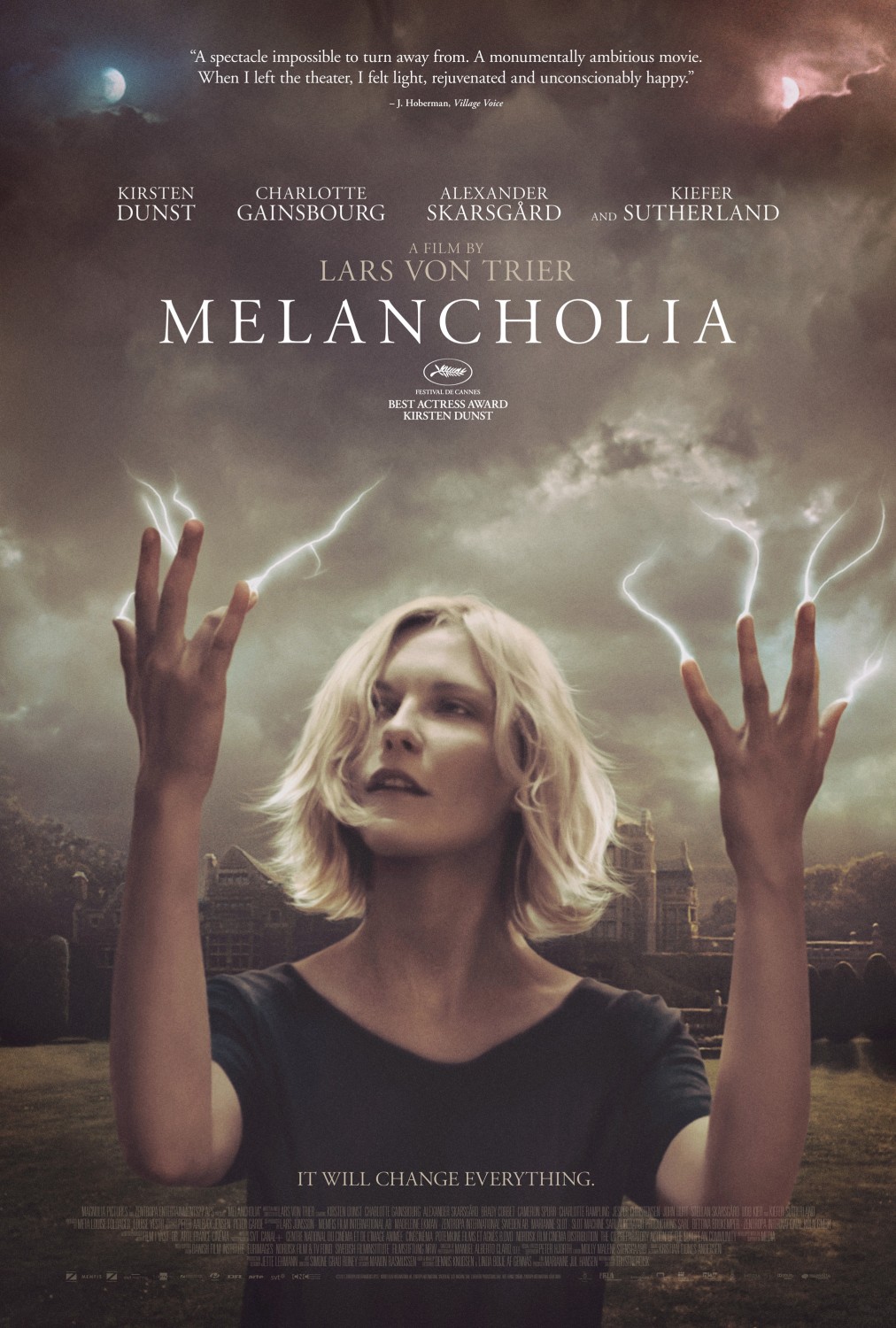
Melancholia (dir. Lars Von Trier)

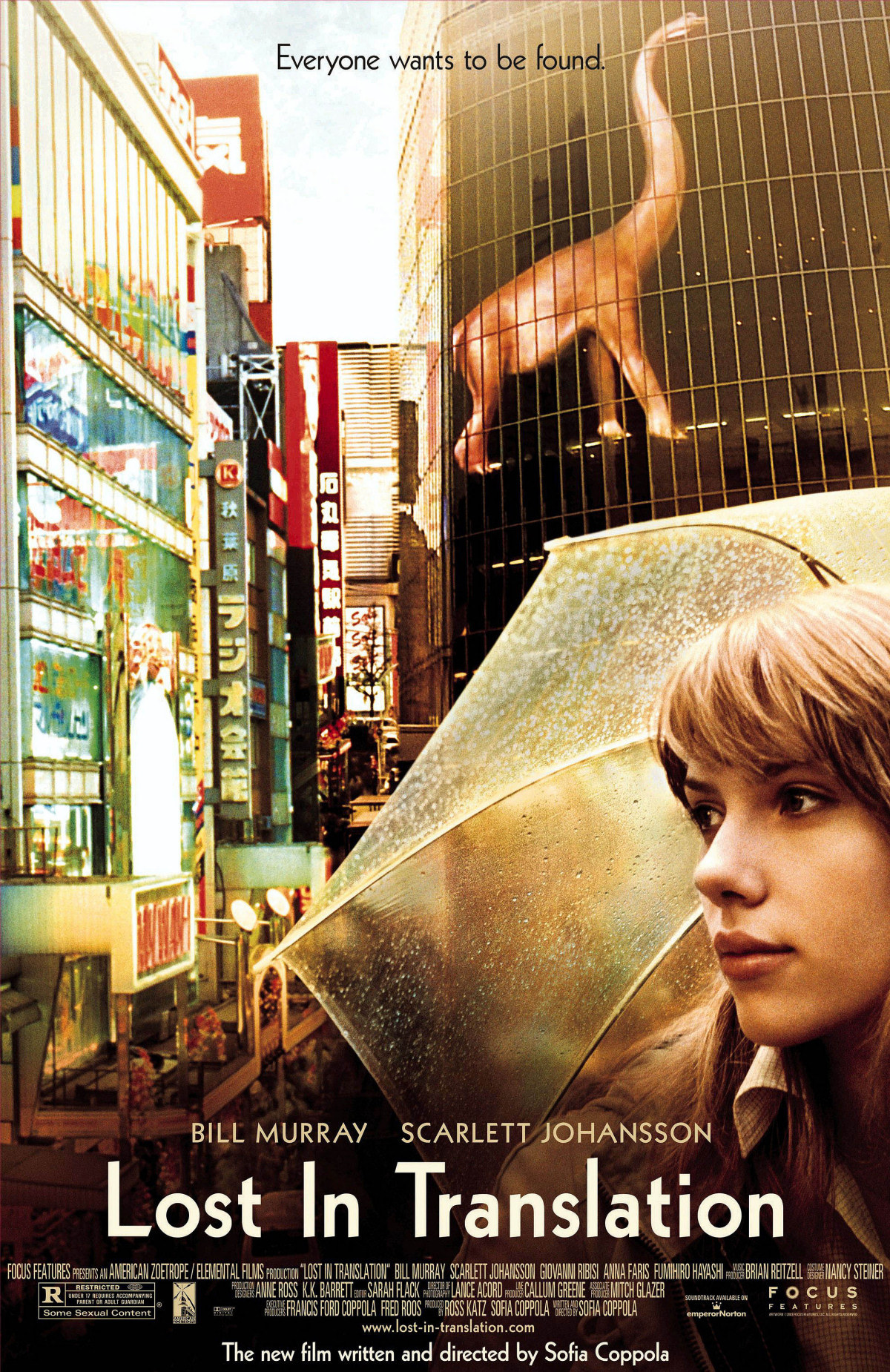
Lost in Translation (dir. Sofia Coppola)


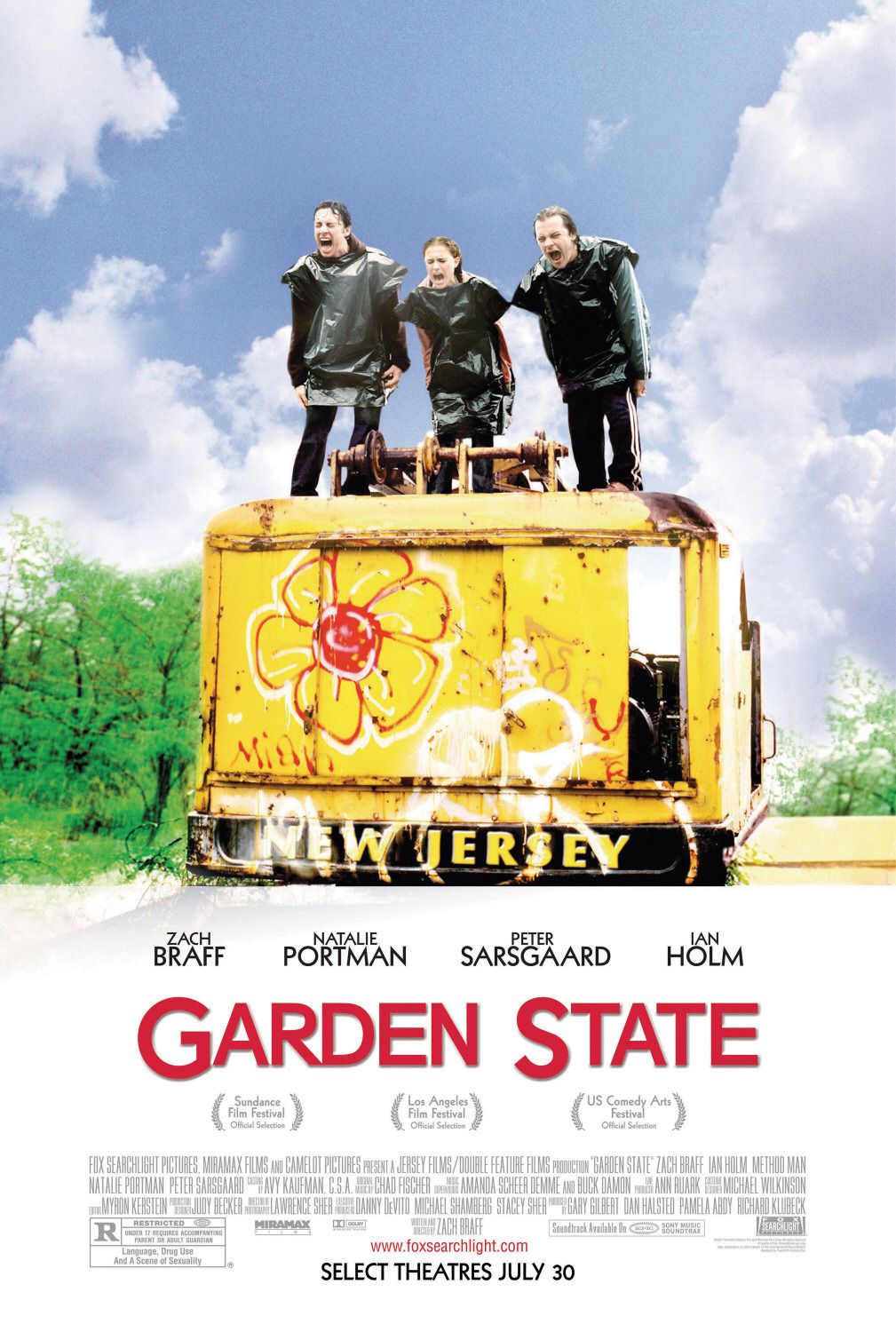
Garden State (dir. Zach Braff)

Young Adult (dir. Jason Reitman)

Black Swan (dir. Darren Aronofsky)

Perfect Blue (dir. Satoshi Kon)

My references range from lighter, comedic type films to the darker, gritter and more psychological stories. I want to go somewhere in between, crossing a witty narration with a dark subject matter and evocative imagery and interesting techniques.

The techniques used by Sofia Coppola and Lars Von Trier are of particular influence to me. Coppola's movies are visually stunning with the use of light and how she frames her subjects. Symbolism is very subtle and the viewer is quietly coaxed into the deeper meanings. Von Trier does similar things but in a much more provocative and liberal way. His use of handheld camera in shots often juxtaposes the fantastical imagery seen in his films, or he will juxtapose a dark scene with an odd choice of classical music to really challenge the viewer. His use of split screen is also very interesting. We will see the central scene and either side of it we will have two images that can give further insight into the head of our character.

Montage is another thing I love to incorporate, and Darren Aronofsky uses it beautifully in his films Black Swan and Requiem for a Dream. The end montage of 'Requiem' is brutal and unflinching, and the club scene in 'Black Swan' is pounding and electric. All of these directors also use slow-motion that captures the tiny nuances of a performance or bring attention to a specific detail.

Thursday, 13 February 2014

Desolation and Dislocation

Having an elaborate and well-thought-out idea is all well and good, but when the do-ability is questioned you are faced with two choices:

1) Work like hell and organize every aspect of your film down to the last spec of dust.

2) Come up with an alternative idea that's more do-able, that still holds your enthusiasm and artistic vision.

An idea that I've been throwing around in my head is the story of two people trying to survive in a desolate and dangerous post-apocalyptic landscape. It has the potential to be very cinematic and moving, Zombies is something that can be overdone but I feel that with the recent popularity of these flesh-eating creatures I would be playing to a lot of people's interests.
Recently there was a video game released, 'The Last of Us' and follows the story of a man and a young girl as they try to survive in a dangerous world ravaged by a deadly virus. What strikes me about the game is that the real threat to our characters isn't the zombies that have almost wiped out humanity, but it's the humans that are left that pose the real danger. It basically shows us that people change and become extremely self-reliant when given the will to survive.
In the game, the relationship between the two lead characters (Joel and Ellie) is vital to the emotional impact of the story. This is something I need to seriously consider with my two characters. They learn from each other, they rely on each other and it is clear that they genuinely care for each other.

I can't imagine location will be too problematic, I have a lot of areas in mind that give off a desolate and post-apocalyptic vibe, particularly in the rural areas near me e.g. the Purdysburn hospital complex. The cast is very small, two people at the most and (if I decide on the zombies) a cast of extras. A lot of fun can be had with costume and makeup and with the resources available to me this idea seems very do-able.

Meeting the parents + reference images

One thing you should always consider when developing a film is how the audience can (or cannot) relate to the story. While my original idea is almost intended to distance the audience, I feel this new idea is very relateable while still keeping in with the theme of dislocation.
When you're in a relationship, meeting your partner's parents or your partner meeting your parents can be a daunting prospect. This is a thought that has come into my head more-or-less within the last 48 hours so I've been playing around with it and trying to see if I can still keep elements of my initial idea. So, what if a guy you were dating through an online dating service was about to introduce you to his family, and they were like the Addams family basically? Dislocation ties in with Jess (the main character) feeling out of place among these strange, kooky and Gothic characters.

More to come on this idea, for now here are a number of reference images that I'm drawing some inspiration from. 


I'm very inspired by the hollowed out, almost doll-like look that a lot of Burton's women have so I'm excited to see what my friend can do with this idea.

Oh make me over

I have a couple of people in mind who are happy to help me in the event that this project takes off. One of these people is my oldest friend, Natalie. We've been friend's since we were 5 and we're always happy to help each other out. Aside from being one of my closest friends, she's also an incredibly talented special effects makeup artist (those of a squeamish look away please!).
Since the look of this concept has an overall Gothic feel to it and this style is something we've both been interested in, I'm looking forward to collaborating on a look that will add to the Gothic style. For reference I'm looking at the work of Tim Burton and the makeup in his films, particularly 'Beetlejuice' and 'Sleepy Hollow'.

At this point in development, I'm seriously torn. I had initially envisaged this project as a dark, psychological thriller but after conversations and discussions with friends, the idea of comedy is becoming very appealing to me, and I feel the theme of dislocation can work very well in this new(ish) idea.

Reference images + more on the new concept to come.

Thursday, 6 February 2014

Doodling.


Even before I come up with a story or fully-rounded characters, I will draw my characters obsessively and sketch costume, hair, makeup. It might be considered a bad habit, but I very much work in visuals, even moreso when I'm writing. The look is extremely important for me.

Watch-list for the next few days.

Just a couple of films I will be watching/re-watching over the next few days.

Who's Afraid of Virginia Woolf?
A Tale of Two Sisters

Stoker

A Tale.

Like I said before, Korean cinema is a huge influence on myself and this project I'm developing. One film that's inspiring above the rest is a horror film I watched a long time ago, Kim Ji-woon's 'Janghwa, Hongryeon' in english, 'A Tale of Two Sisters'. The film follows the story of a young girl returning to her family following institutionalization in a mental hospital, she returns to her loving younger sister and father, but also the domineering step-mother. It soon starts to appear that not all is what it seems in the idyllic lake-side home and what follows is a beautiful concoction of psychological horror and brutal twists
 The narrative is very loosely adapted from an old Korean fairy tale which tells the tale of a wicked stepmother who will stop at nothing to save her inheritance, even if it means humiliating and murdering her stepdaughters. Like I said, the film is extremely loosely based on this story and there are only a couple of similarities with different outcomes etc.

The fairy tale set up is an interesting thought to me, the wicked stepmother archetype may be a cliche but it is a classic setup, and maybe an opportunity to be a little subversive and turn the tables. In 'Tale', the protagonist Su-mi is at times a brutal match for her nasty stepmother, this is something I'd like to take further in my piece, maybe with the stepmother coming out as a potential victim. These are all things to consider if I'm going to come with a 'satisfying' conclusion to my story. I use the word satisfying lightly because as with most of the films I watched, they will often leave you wanting more, not offering the 100% vacuum-packed closure that we're used to in classic Hollywood.

So how does this relate back to dislocation? Well, returning to life after institutionalization can be considered a great dislocation in both ways (the institutionalization itself and coming home). The psychology of the characters is very dislocated, having distorted views on themselves, others and the events that are transpiring in front of them.

Try.


'Try' (2000) 
dir. Jonas Ã…kerlund 
Wri. Billy Corgan

This is a short-film I watched a long time ago back in A-Level. It's a brutal film about a young homeless couple living in a Stockholm train station and their struggle for a better life while dealing with the trouble of drug addiction and pregnancy. I personally love Ã…kerlund's style, he has directed some of my favourite music videos of the past two decades, from Madonna to Rammstein, he has a distinctive style that leaps off the screen and demands to be noticed.

In this piece there's a stark and shocking transition between the psychedelic dream gone wrong and the grim and dark reality our protagonists live in. The entire piece is done in voice-over right until the end and adds a real gut punch to the visuals. 

Creative Skeletons

I'd like to think that I'm a creative individual with at least one creative bone in my body, we all have an element of creativity that is unique to us, our own personal vision and ideas etc.

I've found it fun (I was about to put easy but the last thing I want to be at this stage is complacent) to play about with the theme of 'dislocation'. Over the past week I've been digging out any Korean films I own and rabidly looking for new ones. Something that I've noticed quite a lot in the films I have watched is the theme of 'family' and often how important it is. For me, personally, my family is the most important thing in my life, blood is definitely thicker than water.

I recently watched Park Chan-wook's revenge thriller "Sympathy for Lady Vengeance", a story of a woman who has just been released from prison, having been convicted of the kidnapping and murder of a young boy. As the reasons behind her conviction become more clear, so begins her quest for revenge. Without spoiling too much, it's a brutal film. I'm not a squeamish person by nature, but I did find some of the scenes towards the end extremely hard-going. 'Lady Vengeance' covers the themes of revenge, family, love and possession. Like a lot of revenge thrillers it poses the question, "Do the ends justify the means?", a question I find it very difficult to answer. Again, without spoiling the film, Geum-Ja finishes her quest and reclaims her life, helping others along the way, but she killed to get to this point, so is she truly beyond redemption?

Aside from the tough themes, the film is extremely stylish and beautiful to look at, despite the grim subject matter and on-screen events. Every one of Director Park's films are immaculately
framed and stunningly shot by long-term collaborator Chung Chung-hoon. This is something that really inspires me, that despite the shocking events everything remains artistic and beautiful, almost like standing in the face of adversity.

Another film I watched over the week was "The Host", a creature-feature blockbuster from another Korean master, Bong Joon-ho. The film follows the story of a family who try to survive as a ferocious mutant sea monster ravages the citizens of Seoul along the banks of the Han river. While the film is marketed as a special-effects thrill ride, the monster becomes secondary to the main point of the story, a broken family who are trying to reunite in the face of a great disaster.

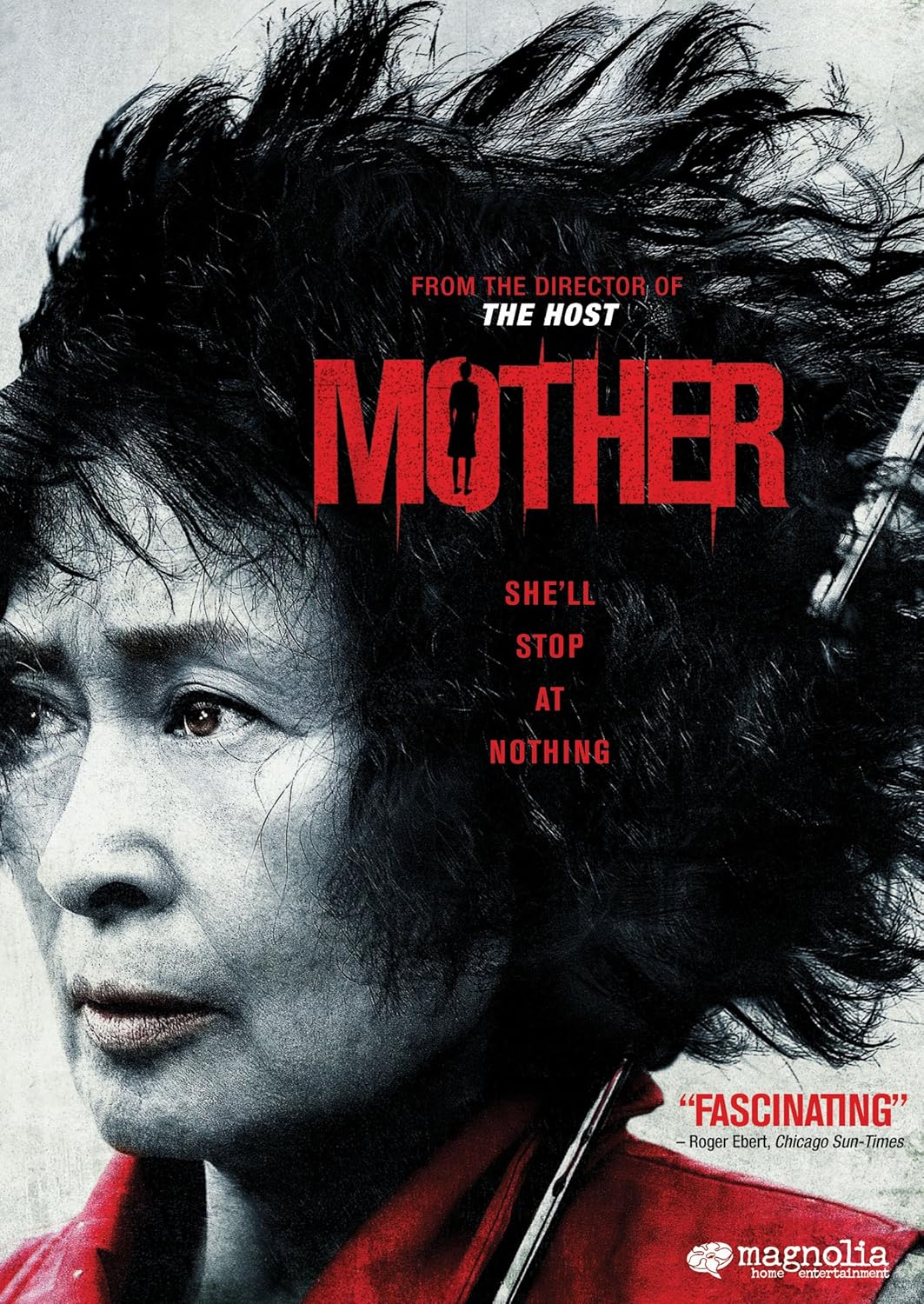
Bong Joon-ho is a genius when it comes to tonal changes and merging genre. His films are jam-packed with pitch black humour and moments of raw emotion. 'Host' does this beautifully, along with 'Mother', a personal favourite of mine. 'Mother' follows the same theme of family, with a nameless Mother going to impossible lengths to prove he
r son's innocence. 'Mother' merges family drama with black-as-night humour and noir-esque thriller. This is one thing I love about Korean cinema, it dares to be different, it refuses to be put into a single box, it takes genre elements and plays with them, and defies the classic Hollywood style.